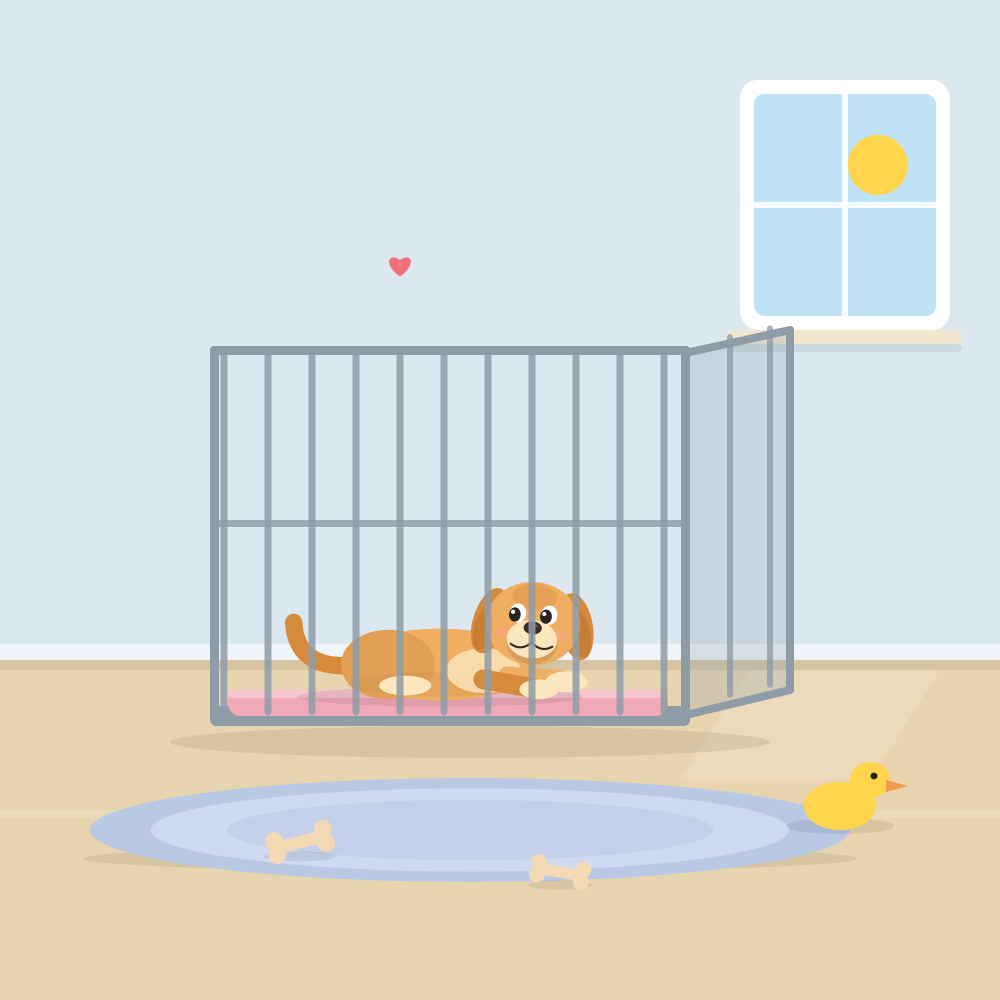
What a crate is for
A crate should be a den, not a cell. Used well, it gives a dog a place that is theirs, helps with house training because most dogs avoid soiling where they sleep, and makes car travel and vet visits easier. Used badly, it becomes a place a dog fears. If your dog is already anxious about being shut in, ask your vet or a qualified trainer before you start.
Choose the right size
The crate should be big enough for the dog to stand, turn around and lie down comfortably. For a growing puppy, buy a crate that will fit the adult size and use a divider to make the space smaller for now. A crate that is too large lets a puppy use one end as a toilet.
Make it inviting
Add soft bedding and a chew toy, and put the crate somewhere you spend time, not in a far corner. Keep the door fixed open at first so the dog can walk in and out as they please.
Step by step
- Scatter a few treats near the entrance, then a little further in, until the dog walks all the way in. Some dogs take minutes, others several days.
- Feed meals in the crate, starting with the bowl near the door and moving it further back each time.
- Close the door for a few minutes while the dog eats, and open it as soon as they finish.
- Build up the time gradually, then start moving out of sight for short periods.
- Give a stuffed chew toy to keep the dog occupied.
- If the dog gets distressed, go back a step. Don't let the dog out while they're whining, because that teaches them that noise opens the door. Wait for a quiet moment.
How long is too long?
Sources give different figures, so shorter is safer. PDSA advises never crating a dog for more than three hours at a time. The American Kennel Club's guidance suggests a rule of thumb of about one hour per month of age for puppies, up to six to eight hours for an adult, and warns against leaving a dog in a crate all day. Young puppies need to go out more often. Make sure the dog has exercise, attention and toilet breaks before and after crate time.
Nights
Many puppies cry for a night or two while they adjust. Putting the crate near your bed lets you hear if the puppy needs the toilet, and the sound of you nearby helps them settle. Our guide to your new dog's first week has more on early nights.
What never to do
- Never use the crate as a punishment or time-out
- Never leave a dog in it for long periods without breaks
- Don't force the dog in or shut the door on a dog who is afraid