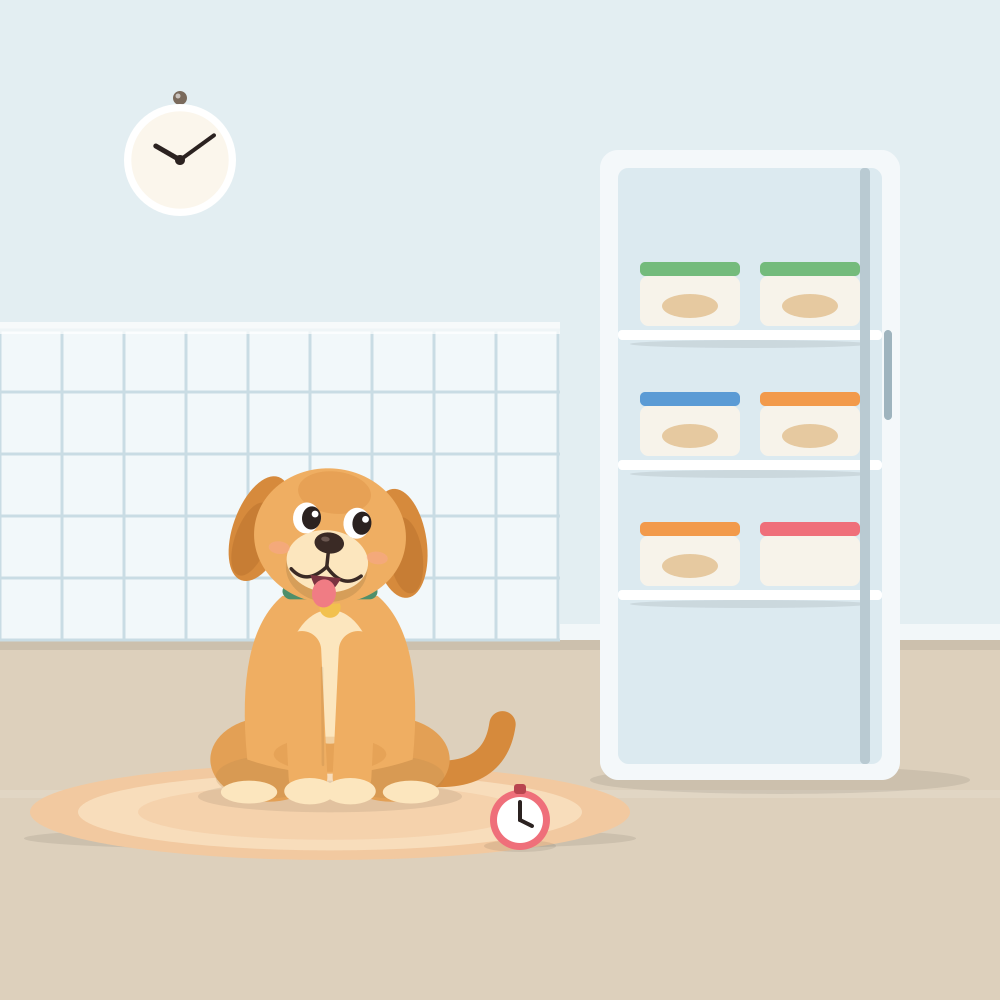
Treat them like leftovers
The USDA's advice on leftovers is the best starting point. Bacteria grow rapidly between 40°F and 140°F (4°C and 60°C), so cooked food should not sit around in that range.
That means a tray of treats left on the counter overnight is not a good idea, however well it was baked.
The two-hour rule
The USDA says to refrigerate cooked food within 2 hours, or within 1 hour if the temperature is above 90°F (32°C), such as at an outdoor picnic in summer. Perishable food left out for longer should be thrown away. Cool treats completely before storing them, because warm treats in a sealed box create condensation.
To cool food quickly, spread it in a single layer or use shallow containers.
In the fridge
The USDA says leftovers can be kept in the refrigerator for 3 to 4 days. Use an airtight container so the treats stay moist and do not pick up smells from other food. Treat that as the limit for anything containing meat, fish, egg, dairy or cooked rice or vegetables.
Our recipe pages give a storage time for each recipe, so follow the one on the recipe you made.
In the freezer
Freezing is the easiest way to keep a big batch. The USDA says frozen leftovers stay safe indefinitely but can lose moisture and flavour, so it suggests 3 to 4 months for best quality. Freeze treats in a single layer first, then move them to a bag so they do not stick together.
Label the bag with the name and the date.
Thawing safely
The USDA lists three safe ways to thaw: in the refrigerator, in cold water in a leak-proof bag, or in the microwave. Refrigerator thawing is slowest but keeps the food safe the entire time. After thawing, use the treats within 3 to 4 days. Do not thaw on the counter.
Frozen treats such as frozen banana apple drops are different: they are meant to be served frozen, but once a piece has thawed it should be used the same day.
When to throw them out
Throw treats away if they smell sour, feel slimy, show any mould or have been left out longer than the two-hour rule allows. If you are unsure, do not give them to your dog.
Dry, hard treats that have been dried thoroughly keep longer than moist ones, but they still contain no preservatives, so keep them in an airtight container and check them before use.