Why dogs overheat
A dog's main way of cooling is panting, and it works less well in hot, humid or still air. Flat-faced dogs, such as pugs and bulldogs, are at higher risk because short noses make panting less effective. Older dogs, overweight dogs and dogs with heart or lung disease are also at greater risk.
Never leave a dog in a parked car
A car can heat up to deadly temperatures in minutes, even on a mild day, even in the shade and even with the windows open a crack. Death can occur in a short time. If you can't take your dog with you into a place, leave them at home.
Walks, pavements and exercise
Walk in the early morning or the evening, and keep outings short and gentle when it's hot. Hot pavement can burn paws, so check the surface with your hand. Rest in the shade, and take water with you. Our guide to how much exercise a dog needs has more on adjusting for the dog in front of you.
Shade, water and the home
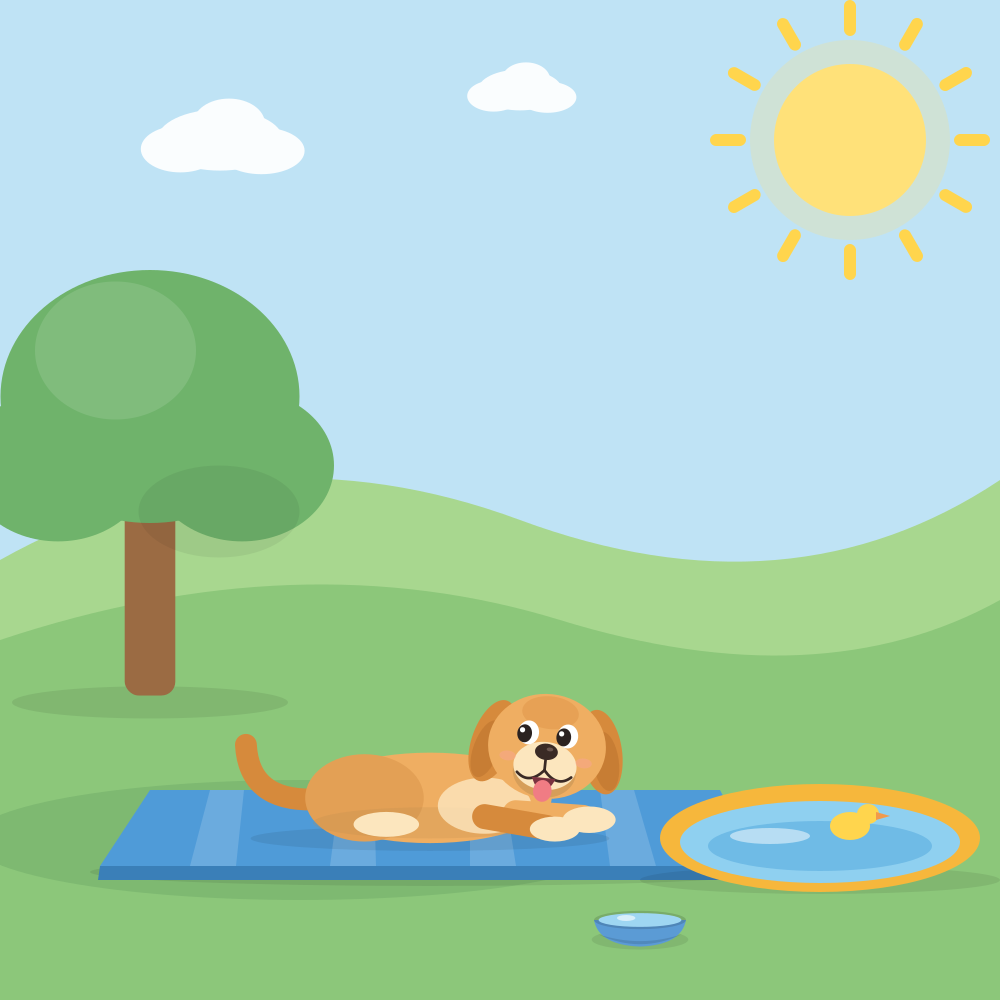
Make sure your dog always has shade and fresh water, indoors and in the garden. A cool room with the curtains closed or a fan can help. Don't leave a dog in a conservatory or a hot room.
Signs of heatstroke
- Heavy panting and excessive drooling
- Red or abnormally coloured gums and tongue
- Weakness, wobbling or uncoordinated movement
- Vomiting
- Confusion or disorientation
- Collapse or seizures
A dog who collapses or seems unresponsive needs emergency care at once.
What to do first
Move the dog out of the sun into the shade or somewhere cool and start cooling them. Use towels or water at room temperature or cool, wet the neck, armpits and groin, and let air flow with a fan if you have one. Don't use ice or icy water, because very cold water can cause shock and make things worse. Keep cooling until the dog's breathing settles, and call your vet. Even if your dog seems to recover, go to the vet, because heatstroke can cause internal damage you can't see.
Higher-risk dogs and times
Take extra care with flat-faced dogs, puppies, older dogs, overweight dogs and any dog with a heart or lung condition. Even a short walk or play session on a warm day can be enough, so watch the dog rather than the clock.