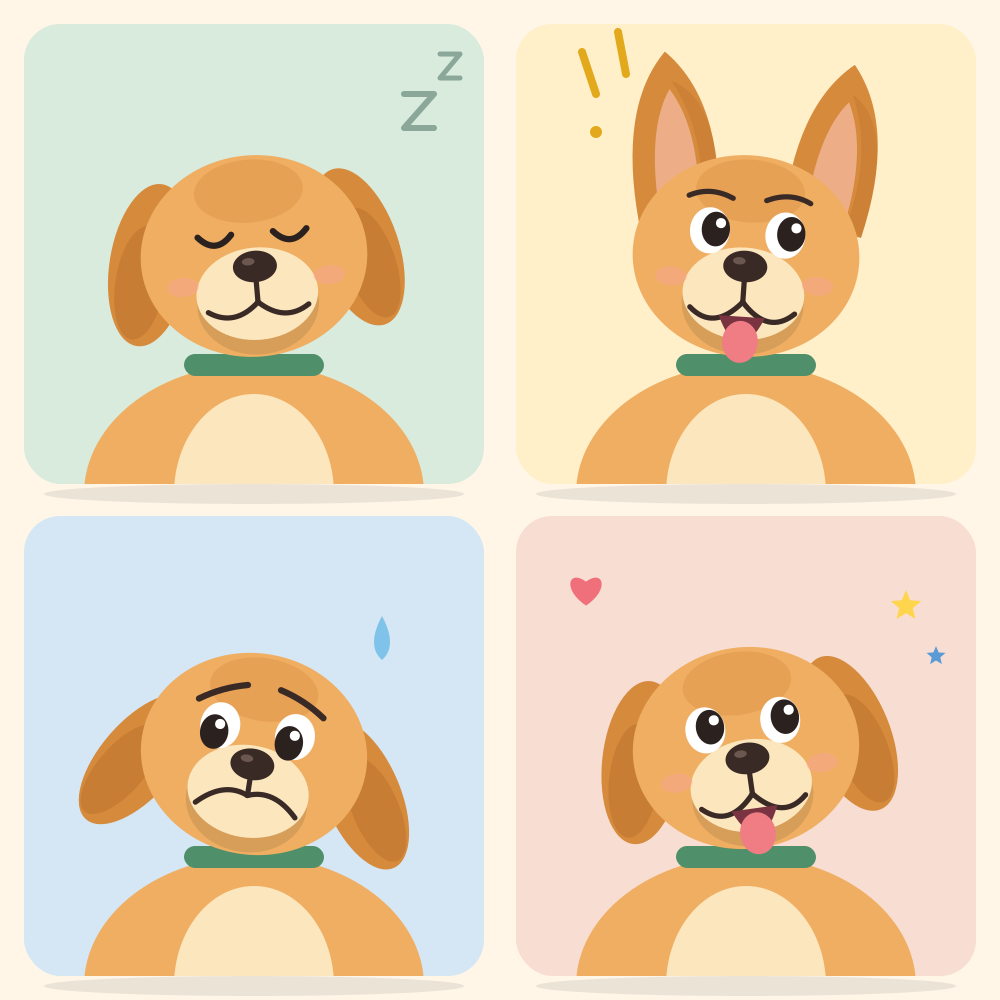
Look at the whole dog
A single signal can mean different things. A raised tail might be confidence or arousal, and a lowered tail might be tiredness or fear. Read the whole body together, then think about what's happening around the dog: who's near, what's new, and how the dog usually behaves.
What a relaxed dog looks like
- A loose, soft body that may look a little wiggly
- Ears and tail in a neutral position
- Soft eyes with relaxed lids
- A mouth that is closed or slightly open
- Slow, sweeping tail movements that move the whole body
Signs of stress or fear
- Tail held low or tucked between the legs
- Ears pinned flat against the head
- “Whale eye”, where the whites of the eyes show
- Lip-licking and yawning when not hungry or tired
- Panting when it isn't hot, pacing or turning the head away
- Crouching, with the body held low
Lip-licking and yawning are easy to misread as hunger or tiredness, but they're common signals of stress.
A wagging tail doesn't always mean happy
A wag means the dog is emotionally aroused, not necessarily happy. A loose, wide, sweeping wag with a relaxed body usually means a friendly dog. A stiff, high or fast, low wag with a tense body can signal tension or anxiety.
Raised hackles and belly-up
Raised hackles, the fur along the back, are a sign of high arousal, not necessarily aggression. A dog who rolls over isn't always asking for a belly rub: in a fearful dog, lying tensely on the back or side with a tucked tail and ears back can be a way of saying “please don't”.
When to give a dog space
If you see signs of stress, the usual advice is to back off and give the dog room. Don't hug, loom over or corner a dog who is showing these signals. This matters most with children, strangers and new dogs, because a dog who is ignored when they ask for space may escalate. Our guide to your new dog's first week explains why quiet matters.
Why the early signs matter
Dogs often use small signals first, such as looking away or licking their lips, and escalate to bigger ones only if those are ignored. PDSA calls this the canine ladder of communication. A dog who growls is giving a warning, and punishing a growl can teach a dog to skip the warning next time. If your dog growls, snaps or seems frightened often, talk to your vet and a qualified behaviourist.