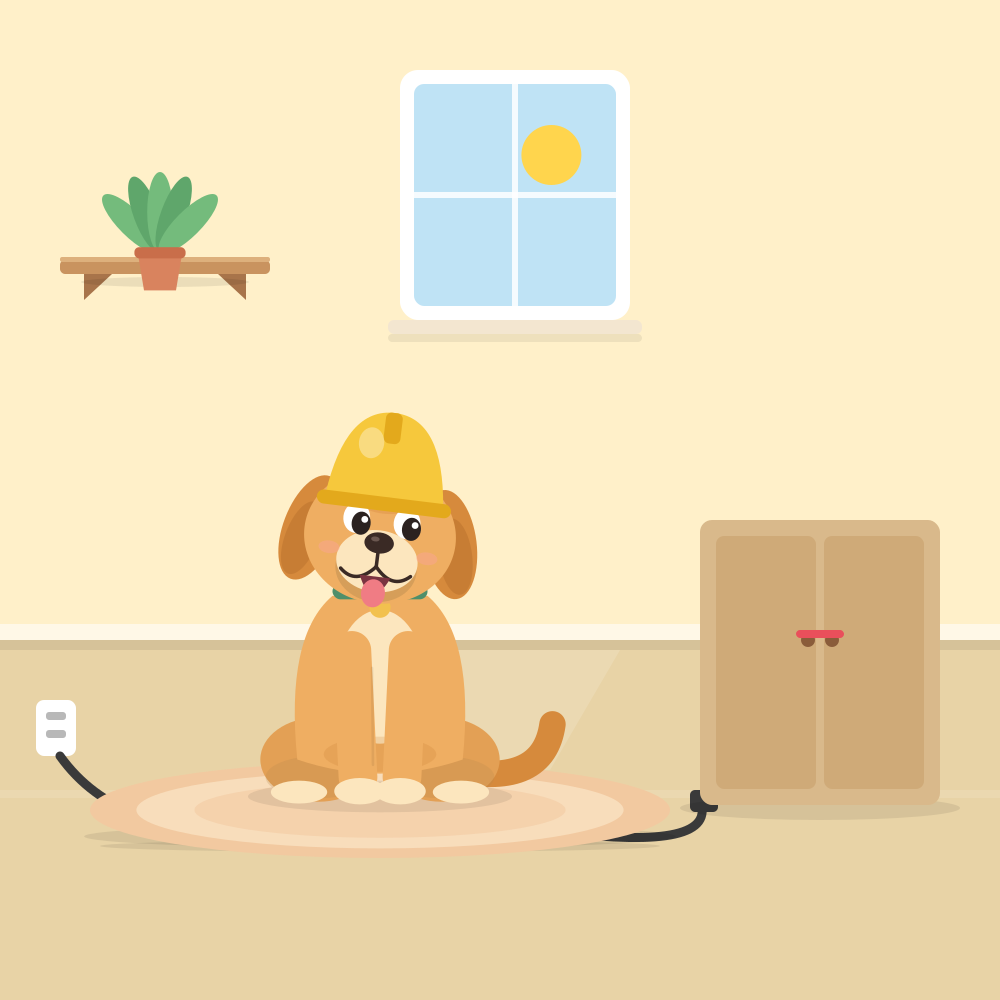
Get down to dog level
Walk through each room on your knees. Anything you can reach and chew, a dog can reach and chew. Look under furniture and behind doors too, because that's where small objects and loose cables hide.
Electrical cables
Chewed cables can cause burns to the mouth and electric shock. Unplug what you can, move cables out of reach, use cable covers or block access with furniture. Pay special attention to phone chargers and lamps near the floor.
Cleaning products and other chemicals
Store cleaning products high up or behind childproof latches, because puppies can open low cupboards with their paws. Keep the dog out of the room while you're cleaning. Remember garages, sheds and balconies, which are often where the strongest products are kept. Pesticides and fertiliser are a concern in the garden, so keep dogs off lawns that have just been treated.
Medicines, bins and small objects
Keep medicines where a dog can't reach them. Childproof caps don't stop a dog from chewing the bottle. Use a bin with a lid or keep it behind a door. Small items such as coins, hair ties, socks and children's toys can be swallowed and cause a blockage, so tidy them away.
Houseplants
Many popular houseplants are toxic to dogs, and mulch and potting soil around them can be a problem too. Move toxic plants out of reach or out of the dog's rooms. Our houseplants and dogs guide sorts dozens of common plants and herbs into dangerous, toxic and safe.
Food on the counter and in the kitchen
Some foods that are fine for people are dangerous for dogs, including chocolate, grapes and raisins, onions and garlic, and anything sweetened with xylitol. Keep food off the edge of counters and tables, and keep the bin shut. You can check any food in our A–Z food guide.
Doors, gates, the garden and the balcony
Check fences and gates for gaps, and keep the front door and garden gate closed while the dog is learning to come when called. If you have a balcony, make sure the dog can't squeeze through or climb the railings, and keep plants and cleaning products out of reach.
Be ready for an emergency
Save your vet's number and the number of the nearest emergency clinic in your phone before the dog arrives. If you think your dog has swallowed something harmful, call a vet straight away. Don't wait for symptoms, and don't try to make the dog vomit unless a vet tells you to.