The day-one essentials
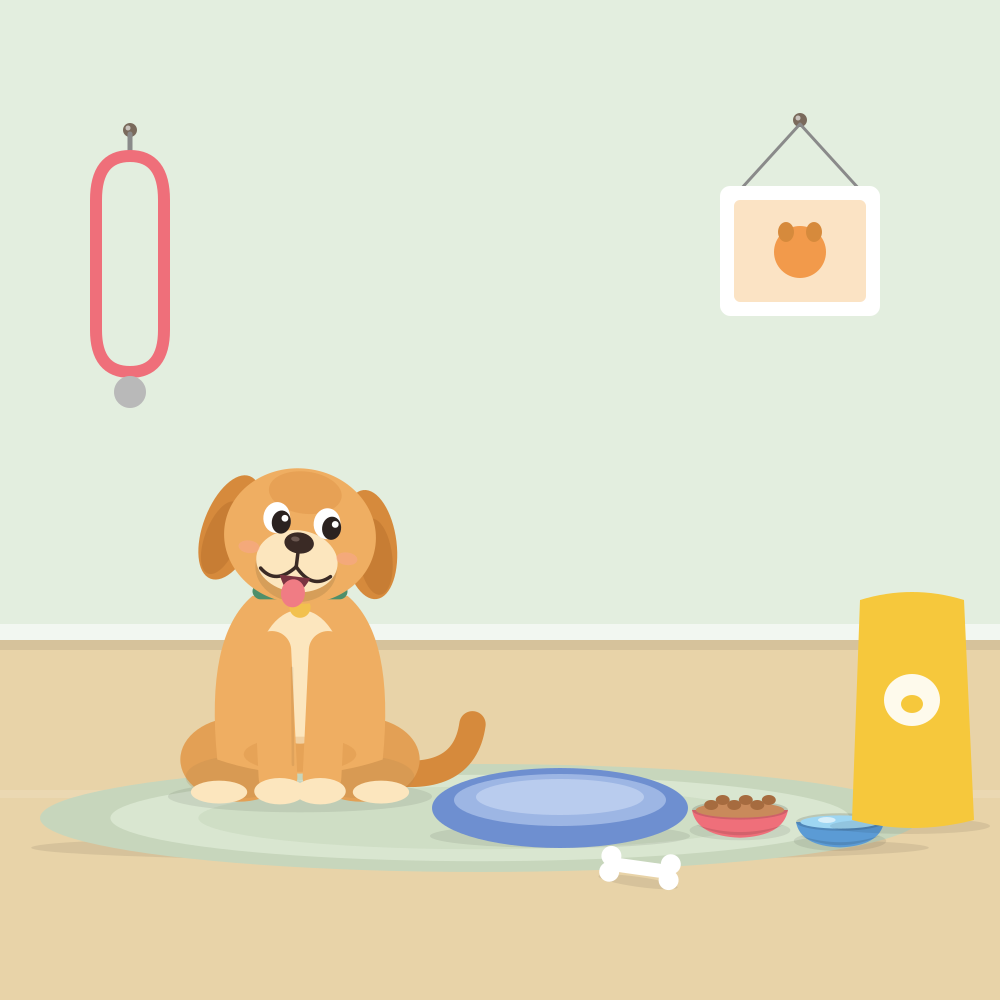
Most checklists agree on the same short list. It's worth having these ready before the dog arrives, because the first day is not the time to be shopping.
- A bed, or a crate with soft bedding
- Food and water bowls, ideally ones that don't tip over easily
- A collar or harness with an ID tag, and a lead
- The food the dog is already eating
- A few safe chew toys
- Waste bags
- An enzymatic cleaner for accidents
A bed, crate and baby gates
A crate is useful for many dogs, but it's optional. If you use one, it should be big enough for the dog to stand up, turn around and lie down. For a growing puppy, choose one that suits the adult size and use a divider while they're small, because a crate that is too big lets a puppy use one end as a toilet.
Baby gates or a play pen help you limit which rooms a new dog can reach while they learn the house. Our crate training guide covers how to introduce a crate without making it a punishment.
Collar, harness, lead and ID
A collar or harness with an ID tag showing your current contact details is the first thing to sort out. A microchip is the permanent back-up, but only if it's registered and the contact details are kept up to date. The rules on microchipping differ from country to country, so check what applies where you live.
VCA advises avoiding retractable leads, which make it harder to keep control of a dog near roads or other dogs. A fixed lead of ordinary length is simpler while you're both learning. For car travel, use a carrier or a seat belt restraint made for dogs, because a loose dog in a car is a risk to everyone in it.
Food: start with what they're used to
Ask the breeder or shelter what the dog has been eating, and keep feeding it for the first days. Changing food is a stress on top of everything else that has just changed. If you want to switch, do it gradually. Our guide to introducing new foods safely explains how.
Choose a complete food that is suitable for the dog's life stage, such as a puppy food for a growing puppy. Treats are extras on top, and our guide to how many treats a dog can have helps you keep them in proportion.
Toys, chews and teething
Choose toys that are too big to be swallowed, and supervise chewing, especially at first. Teething puppies are often happiest with toys made for sore gums. Throw away toys that start to break into pieces.
Cleaning, grooming and teeth
Enzymatic cleaners break down the odour of urine, which helps stop a puppy returning to the same spot. For grooming, you'll want a brush that suits the coat, nail trimmers, dog shampoo and a dog toothbrush with dog toothpaste. Don't use human toothpaste or human shampoo on a dog.
What can wait
Larger and more expensive items are easier to choose after the first couple of weeks, once you know how big the dog is, how hard they chew and what they like. Fancy beds, coats, big toy sets and special training gear can all wait. If you spend the first week's budget on the basics and a vet visit, you're ahead.