Can Dogs Eat Parsley?

LIMIT

LIMIT — Small amounts of culinary parsley are fine for most dogs, but large amounts can make the skin sensitive to sunlight, and wild plants called parsley are a different matter.

This page covers the culinary herb parsley (Petroselinum crispum), both curly and flat-leaf. A sprinkle on food isn't a concern for most dogs. Parsley contains furanocoumarins, which in large amounts can make skin react to sunlight. Wild plants with "parsley" in their name are different species.

Main sources: ASPCA — Toxic and Non-toxic Plants: Parsley; AKC — Can Dogs Eat Parsley?

On this page
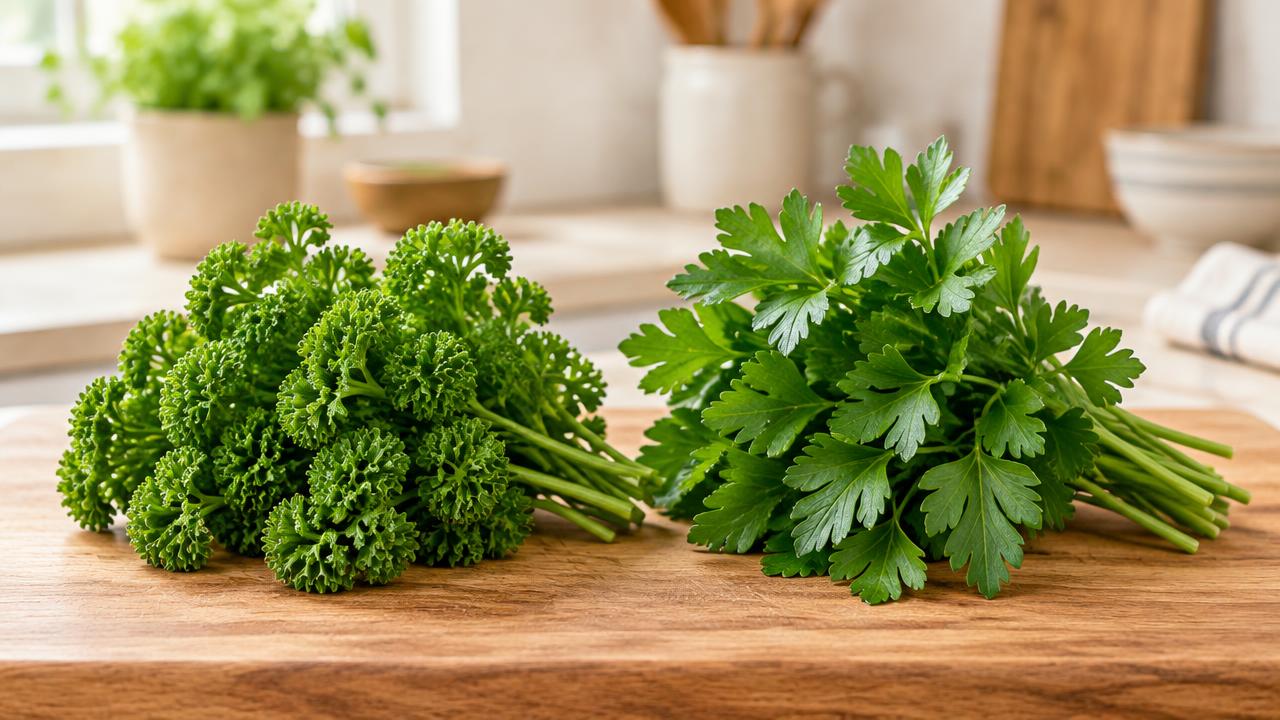
A bunch of curly parsley and flat-leaf parsley on a wooden board

Quick answer

Category
Herbs
Recommended preparation
Fresh leaves, finely chopped, in small amounts
Main concern
Sunlight sensitivity from large amounts; wild look-alike plants
Suitable as everyday food
No

The full answer

The ASPCA lists parsley (Petroselinum crispum, including flat-leaf Italian parsley) as containing furanocoumarins, which can cause photosensitisation, a sunburn-like skin reaction. It notes that large amounts are needed to cause this.

The American Kennel Club describes small amounts of parsley as acceptable for dogs and explains the same skin reaction with large amounts.

Curly and flat-leaf parsley are forms of Petroselinum crispum, but veterinary guidance isn't identical. The ASPCA groups them together, while the American Kennel Club recommends curly parsley as the safer choice and advises more caution with Italian or flat-leaf parsley. For that reason, keep portions small and don't treat either form as a regular food.

Several wild plants are called "parsley" or look similar, including spring parsley, cow parsley and fool's parsley. They're different species, some of them harmful, and this page doesn't apply to them. Parsley root isn't covered here either.

Concentrated parsley supplements, oils and extracts aren't assessed on this page.

Risks and Things to Know

  • Large amounts can cause a sunburn-like skin reaction.
  • Too much can cause stomach upset.
  • Wild plants that resemble parsley can be harmful and are not covered by this page.

How much is okay?

Use it as a small sprinkle on food, not as a regular food. Stop if you notice skin redness, itching or stomach upset.

How Should I Prepare It?

  • Wash fresh culinary parsley and chop it finely.
  • Add a small pinch to your dog's food; do not use parsley cooked with garlic, onion, oil or salt.
  • Do not let your dog graze on wild plants that look like parsley.
What If My Dog Ate Too Much?

If your dog ate a large bunch of parsley, watch for stomach upset and for red or irritated skin, especially on lightly haired areas exposed to sunlight.

Contact a vet if your dog ate a wild plant you cannot identify, or if vomiting, diarrhoea or skin irritation develops.

This guide is for general educational purposes and isn't a substitute for advice from your veterinarian. If your dog has eaten something potentially toxic or is showing concerning symptoms, contact a veterinarian promptly.

Frequently Asked Questions

In small amounts, culinary parsley is fine for most dogs. Large amounts can make the skin sensitive to sunlight.

Veterinary guidance is not identical. The ASPCA groups curly and Italian or flat-leaf parsley under Petroselinum crispum, while the American Kennel Club recommends curly parsley as the safer choice and advises more caution with Italian or flat-leaf parsley. Keep either form to a small amount and do not use it as a regular food.

We do not make that claim. Bad breath can have medical causes, such as dental disease, which a vet should check.

No. Plants such as spring parsley, cow parsley and fool's parsley are different species, and some are harmful. Contact a vet if your dog ate one.

This page covers the leafy herb only. Parsley root is not assessed here.

How this guide was written

Last updated 12 October 2026. We write from widely published, mainstream pet-health sources and avoid presenting feeding amounts as veterinary prescriptions.

Browse every food in our A–Z guide