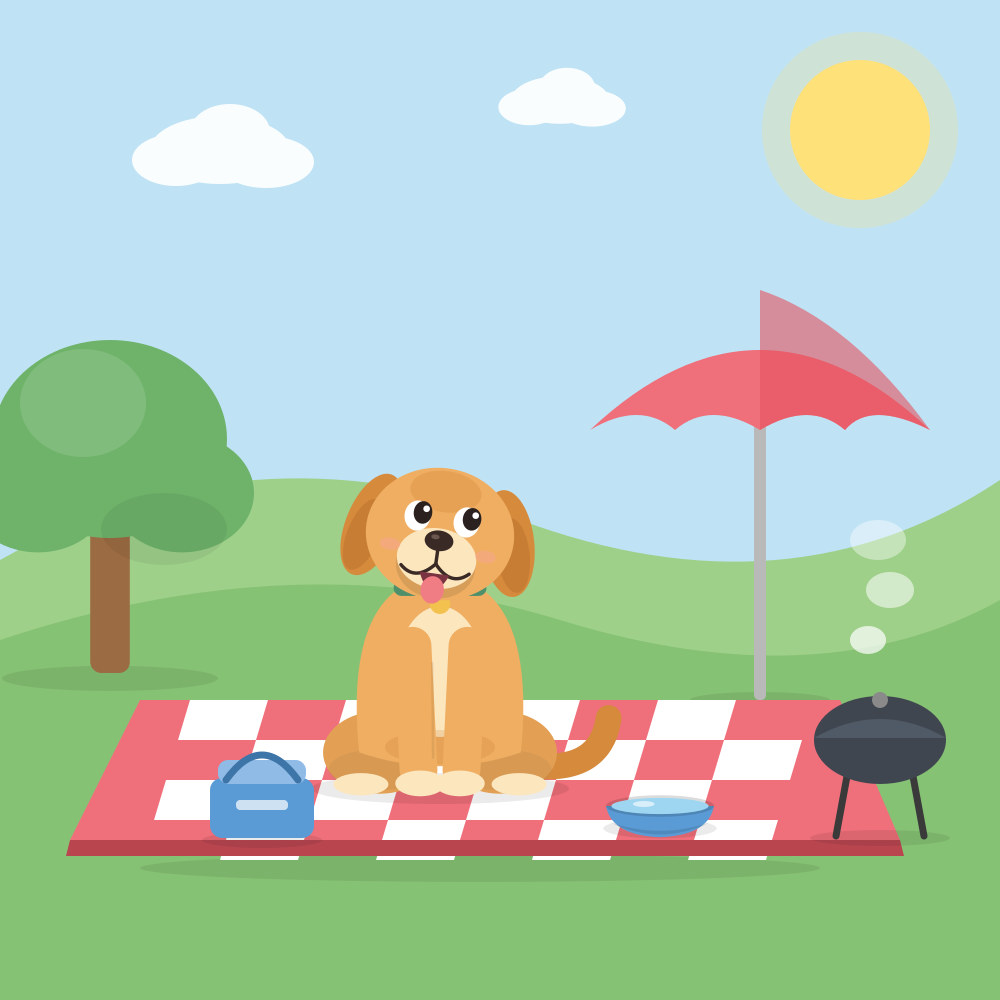
Keep food and drinks out of reach
The ASPCA's barbecue advice says to keep food and drinks out of reach. Onions and garlic can upset the stomach or damage red blood cells, grapes and raisins can damage the kidneys, and xylitol can cause low blood sugar and liver damage in dogs. See our pages on onions, grapes and xylitol.
Alcohol affects pets at much smaller amounts than people, so keep drinks out of reach too. Ask guests to keep their plates and bags off the floor.
Corn cobs, skewers and bones
The ASPCA says skewers can injure the stomach and intestines, and that corn cobs often cause intestinal blockages in dogs. Use a covered bin for food and rubbish, and keep an eye on the cooling grill and the bin as well. Our page on corn explains the issue. Do not give cooked bones, which can splinter.
Fatty and seasoned food
Burgers, sausages and marinated meat are rich and often seasoned with onion and garlic. A fatty meal can upset a dog's stomach. If you want to share something, set aside a plain piece of fully cooked chicken or steak before seasoning and cooking, and cut it small.
Our pages on sausage and hot dogs explain why those are best skipped.
Grease and grill cleaning
The ASPCA says to let grease cool and put it in the bin, not on gravel, sand or the ground, where dogs may eat it and develop stomach irritation, blockages or pancreatitis. Charcoal and lighter fluid can cause stomach distress, and grill cleaners can burn the mouth and digestive tract.
Heat and water
Provide plenty of water and shade. The ASPCA advises that if a dog cannot stop panting, seems weak or wobbly, or is vomiting, you should move it to a cooler place right away and see a vet even if the signs improve. Short-nosed breeds such as Bulldogs and Pugs overheat easily. Our guide to keeping your dog cool in hot weather has more.
Food left out in the sun
The USDA says perishable food should not be left at room temperature for more than 2 hours, or 1 hour above 90°F (32°C), such as at an outdoor picnic in summer. That applies to your dog's treats and any food you pack for them, so keep it in a cool bag.
If you think your dog has eaten something harmful, read what to do if your dog eats something toxic.