The full answer
Ripe papaya flesh is a soft, sweet fruit that most dogs handle without trouble in small amounts. It's not on veterinary poison lists, and nothing about the flesh itself makes it a special risk.
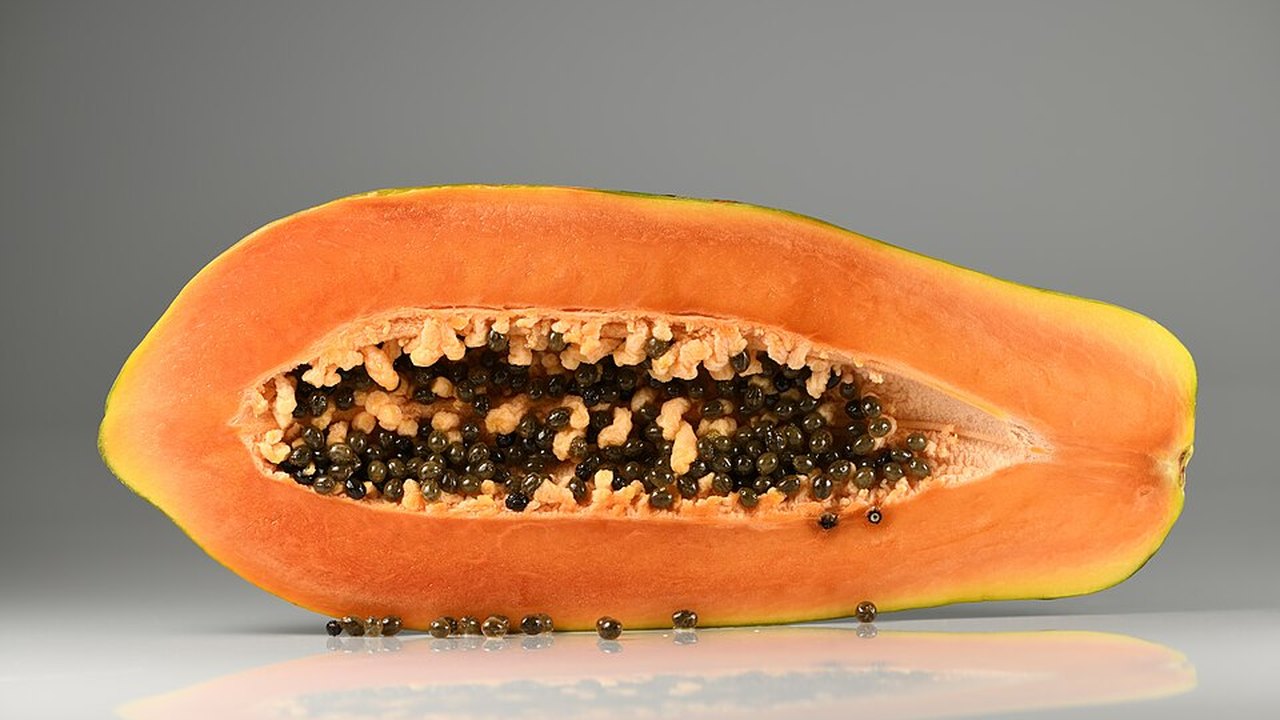
Preparation is where papaya needs attention. The skin is tough and not something a dog should chew through, and the central cluster of small black seeds is worth removing entirely. Dogs don't need the seeds, they're easy to swallow in a mouthful, and there's no benefit in leaving them in. Scoop them out with a spoon and serve the flesh alone.
Size matters too. Papaya is soft enough that most dogs won't choke on it, but a dog that inhales food can still swallow an oversized chunk. Cutting the flesh into pieces that suit your dog's mouth is a two-second habit that removes the question.
Papaya is often talked about in terms of digestive enzymes. We don't make that claim here. Papaya is a fruit, not a treatment, and if your dog has ongoing digestive problems, that's a conversation for your vet, not something to manage with fruit.
Is Papaya Good for Dogs?
Papaya provides water, fibre and natural sugars, and it is soft enough to suit older dogs who dislike hard treats. It is a pleasant occasional extra rather than something that improves a dog's health. A dog eating a complete diet gets everything they need without it.
Potential benefits
- Soft texture, which suits dogs who struggle with crunchy treats
- High water content and a modest amount of fibre
- Easy to cut into small, controlled portions
Risks and Things to Know
- The seeds are worth removing completely — they are easy to gulp and serve no purpose for a dog
- The skin is tough and fibrous and should not be offered
- Natural sugar and fibre can cause loose stools if a dog eats a lot in one sitting
- Unripe papaya is firmer and more likely to upset a stomach than ripe flesh
- Dried papaya and papaya in fruit salads or desserts are concentrated in sugar and may contain sweeteners
How much is okay?
A few small cubes is sensible for a medium dog, and one or two for a small one. Take out the seeds and skin.
Offer it on its own the first time so you can see how the stomach handles it. Dogs with diabetes or a history of pancreatitis shouldn't have new sweet fruit without vet advice.
How Should I Prepare It?
- Choose ripe papaya — the flesh should give slightly under gentle pressure
- Cut it open and scoop out every seed
- Remove the skin completely
- Cut the flesh into bite-sized pieces suited to your dog
- Serve plain — no yoghurt, syrup, honey or sugar
- Avoid dried papaya and papaya-flavoured products