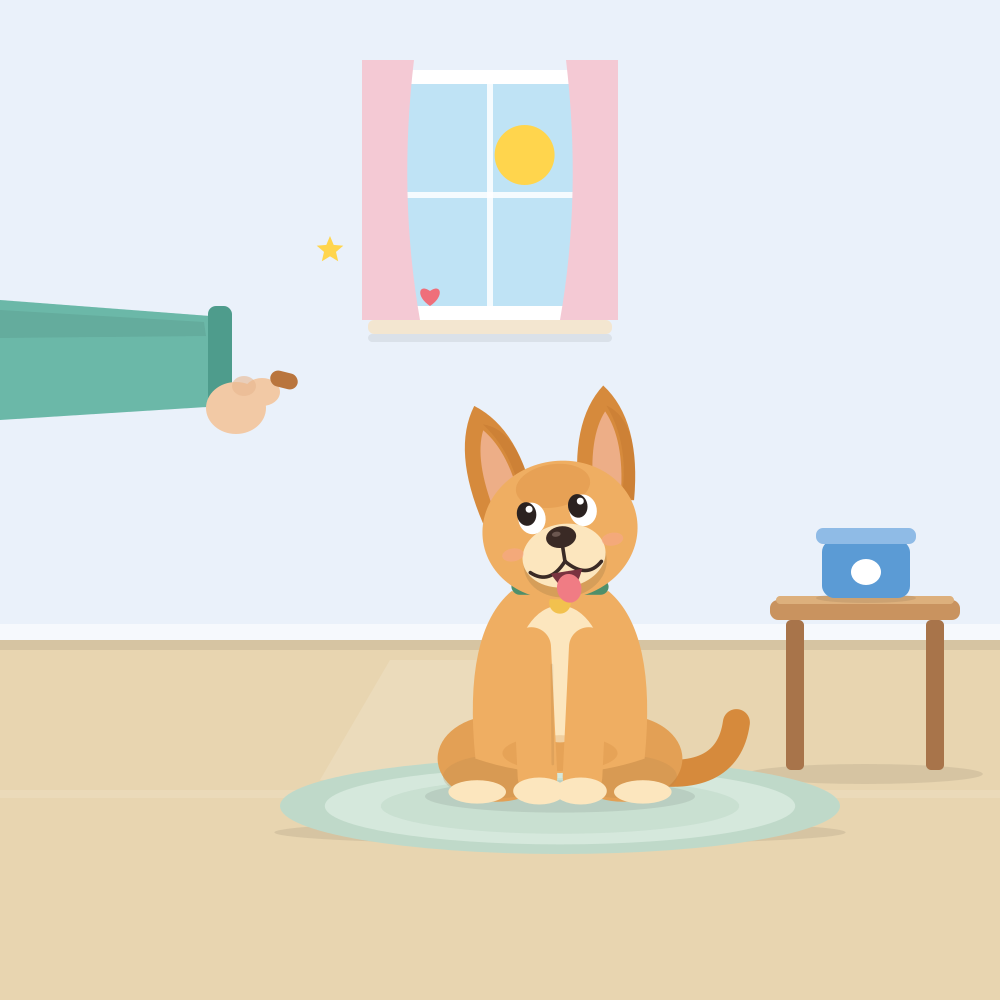
What makes a good training treat
The Humane Society advises a very small, soft piece of food, so the dog swallows it quickly and looks straight back at you. Treats that must be chewed or that crumble tend to send the dog searching the floor instead of watching you.
The ASPCA's advice for training is similar: use the smallest pieces you can.
Timing matters more than the treat
The reward has to arrive within seconds of the behaviour, or the dog may not connect the two. If you reward a dog after it has already stood up from a sit, you teach it to stand. Pair each food reward with a happy word such as good dog.
Safe everyday foods that work
Small pieces of cooked chicken, cooked turkey, plain cooked eggs, carrots, blueberries and green beans are rated safe on our food pages. The Humane Society also lists cooked chicken and beef, soft commercial treats and cheese as foods that have worked well.
Cheese is rated Limit on our site, so keep the pieces tiny. Our chicken and carrot training bites are a homemade option made for exactly this job.
Foods to keep out of the treat pouch
Never use grapes, raisins, chocolate, macadamia nuts or anything containing xylitol. Check the label on nut butters. Avoid salty, seasoned or fatty scraps as well.
Count treats in the daily food
Training can use a lot of treats in a short session. The ASPCA suggests keeping treats to 5% or less of daily food intake, while the WSAVA guide to treats says under about 10% of daily calories. Either way, subtract training treats from the meal rather than adding them on top, for example by using part of your dog's own food as rewards.
Fading the treats
While a dog is learning a new behaviour, reward every correct response. The Humane Society says that once the behaviour is reliable you can reward about three times out of four, then about half the time, then about a third, and so on. Vary the pattern so the dog does not learn a predictable schedule, and keep praising every time.
If your dog is not food-motivated, a toy or a short game can be the reward instead.