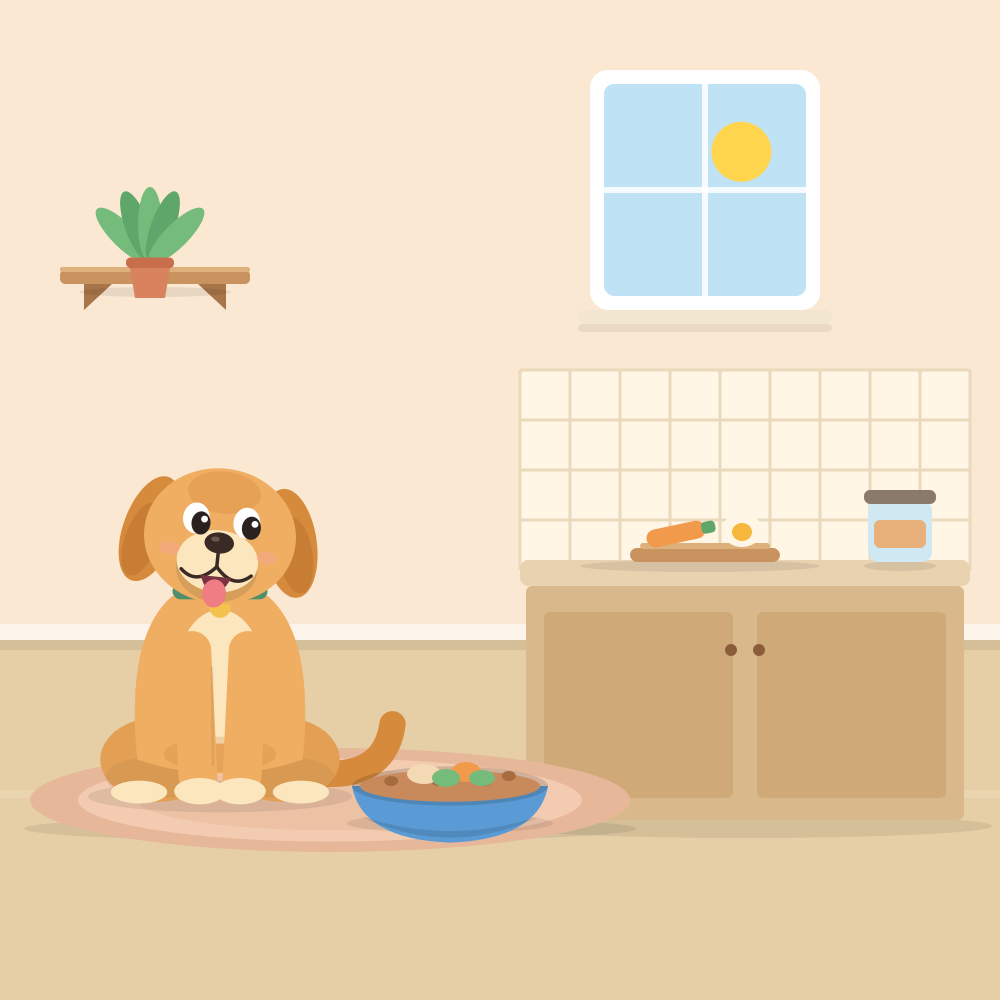
The complete food stays the base
A complete and balanced food carries a nutritional adequacy statement for the dog's life stage, as explained in our guide to reading a dog food label. Toppers do not have that statement, so they should sit on top of a complete food, not replace it.
The WSAVA treats guide and the ASPCA both recommend keeping extras small, at under about 10% of calories and 5% or less of food intake respectively. Count a topper as part of that allowance.
Safe things to add
Good choices include small amounts of plain cooked chicken, cooked eggs, cooked turkey, plain rice, carrots and green beans. All are rated Safe on our food pages. Use fresh, plain food with nothing added.
Cook meat and eggs fully
The USDA gives a safe minimum internal temperature of 165°F (74°C) for poultry and 160°F (71°C) for ground meats. The ASPCA lists raw meat and raw eggs among the foods that can carry Salmonella and E. coli. Cook both thoroughly, let them cool and chop them small.
Things to leave out
Do not add anything cooked with onion or garlic, including stock, gravy and many ready-made broths. Avoid salt and seasoning, fatty trimmings and sausage. The ASPCA also notes that milk and dairy can cause diarrhoea or digestive upset in pets that lack enough lactase.
Introduce one change at a time
Add one new topper at a time, in a small amount, and wait a day before adding more or trying another. If you see vomiting, loose stools, itching or low energy, stop and ask your vet. Our guide to introducing new foods safely explains the steps.
Storing leftovers
Prepare small amounts. The USDA says cooked leftovers can be kept in the refrigerator for 3 to 4 days and should be refrigerated within 2 hours. Cool them quickly, keep them covered and throw away anything that smells off. Our guide to storing homemade dog treats has more detail.