The full answer
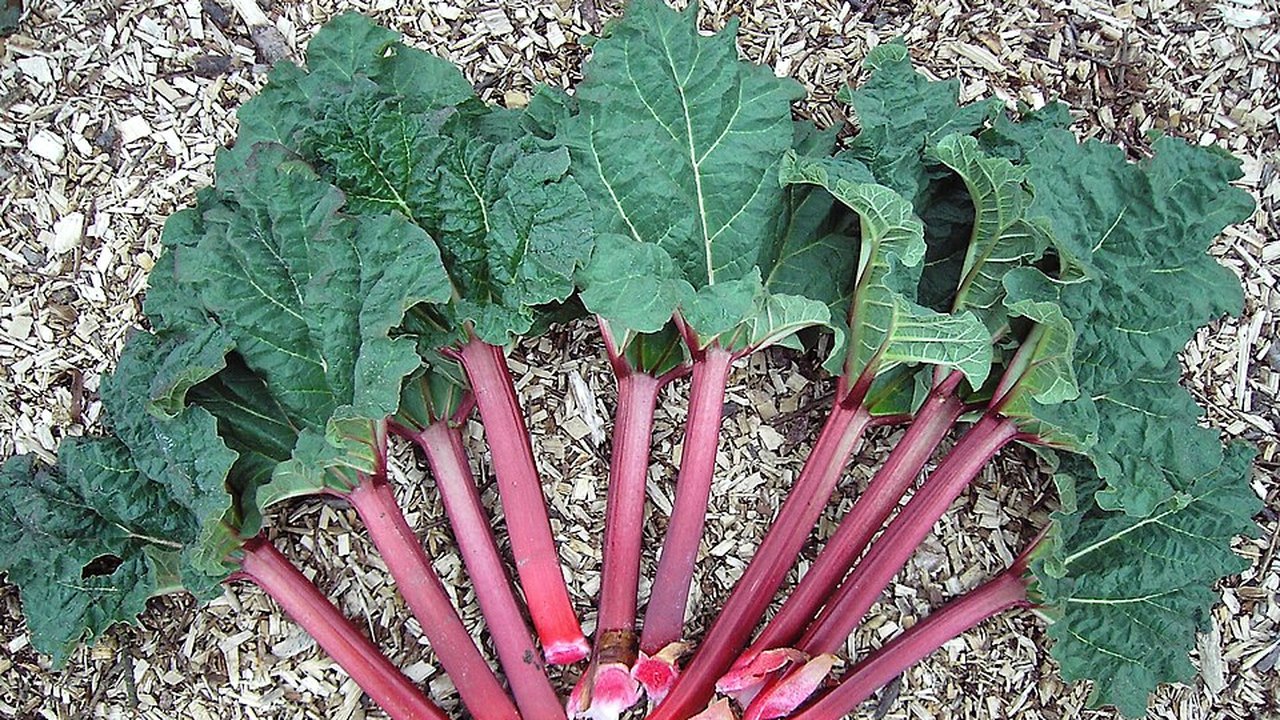
The Merck Veterinary Manual describes rhubarb stalks as edible and not a concern, and says the soluble-oxalate danger comes mainly from the leaves. Pet Poison Helpline also describes the stalks as containing very little soluble oxalate and as nontoxic.
The leaves are the dangerous part. They contain much higher concentrations of soluble oxalates. Pet Poison Helpline and the ASPCA describe signs after leaf ingestion that can include drooling, vomiting, diarrhoea, tremors, low blood calcium and kidney injury.
Leaves can still be attached to stalks from the garden or the shop, so trim every stalk fully before it's anywhere near your dog.
Even trimmed stalks aren't an ideal routine treat. They're tart and fibrous, and we treat rhubarb as a food to limit.
Rhubarb pie, crumble, jam and compote are sweetened products with other ingredients. They aren't equivalent to plain stalks and aren't covered by this page.
Risks and Things to Know
- Rhubarb leaves contain high levels of soluble oxalates and must never be fed.
- Leaves may still be attached to stalks from the garden or shop.
- Stalks are tart and fibrous and are not an ideal treat.
- Pies, crumbles, jam and compote contain sugar and other ingredients.
How much is okay?
If you offer rhubarb at all, a small piece of plain, fully trimmed stalk, and not often. Never the leaves.
Fence off or supervise dogs around rhubarb plants in the garden. Dogs with kidney problems or a history of stones shouldn't have rhubarb without vet advice.
How Should I Prepare It?
- Remove the leaves completely and discard them where your dog cannot reach them.
- Wash the stalk and cut it into small pieces.
- Do not add sugar, and do not share pies, crumbles or other desserts.